

Nigerian Stakeholders Place Performance Democracy, Citizenship At Centre Of Governance
BY NGOZI ONYEAKUSI

All the way from the Nigeria House in New York, Nigerian stakeholders have called for a shift from leadership-centred politics to a system of governance driven by measurable results, citizen participation and accountability.
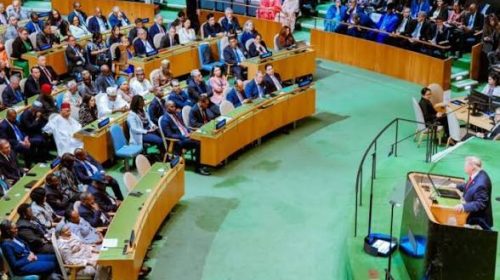
This was the focus at a side event held during the 81st United Nations General Assembly (UNGA) in Manhattan, New York.
The roundtable, themed “Performance Democracy and Transformational Leadership,” took place on September 26, 2026, at Nigeria House, bringing together diplomats and Nigerians from diverse professional backgrounds to examine how democratic governance can translate into tangible improvements in citizens’ lives.
Convened by Citizen Bolaji O. Akinyemi and moderated by broadcast and multimedia journalist Lydia Enyidiya Eke, the event was also streamed globally via Zoom, enabling Nigerians at home and in the diaspora to participate in the conversation.
The discussion came against the backdrop of the 81st UN General Assembly, whose overarching theme was “Restoring Trust, Managing Transformation: A United Nations That Delivers for All.”
Delivering the keynote address, Nigeria’s Consul General in New York, Ambassador Abubakar Jidda, examined Nigeria’s ongoing political and economic reforms, including the removal of the petrol subsidy and changes to the country’s fiscal and monetary framework.
Jidda acknowledged the difficult consequences of the reforms for citizens but maintained that the policies were intended to address longstanding structural challenges and reposition the economy.
He stressed that transformational leadership must extend beyond the federal government to state and local governments, with the impact of policies on ordinary Nigerians serving as the ultimate measure of success.
The discussion however underscored the need to assess democracy not merely by elections, political appointments and policy announcements, but by the extent to which government institutions deliver security, quality education, accessible healthcare, employment opportunities, infrastructure and improved living standards.
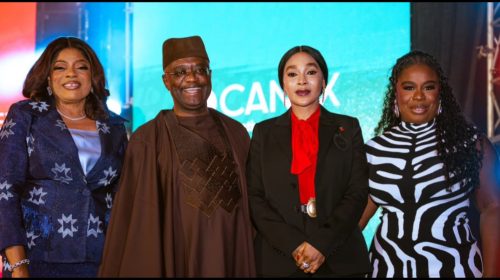
Those associated with the event included Dr Bolaji Akinyemi, convener of the roundtable; Ambassador Abubakar Jidda, Consul General of Nigeria in New York and keynote speaker; Lydia Enyidiya Eke, the moderator; and Ambassador Vivian Okeke, former Ambassador and a senior Nigerian representative at the International Atomic Energy Agency.
Other personalities included Mr Olatunde Badmus, CEO of Food Bank/EBTeam, Houston, USA; Mr Blackson Olaseni Bayewumi, Country Director of the Royal Commonwealth Society, Nigeria; Dr Wale Adekanla, Founder and CEO of The Leadership Channel Institute, Texas, USA; Dr Jane O. Egbo, Executive Director of Paradise Mission for Widows and Teenage Girls, USA; and Professor John Kalu Osiri, Chancellor of Osiri University, Nebraska, USA.
Also listed were Mrs Chiyelu Fafowora, Director of ChiChi Therapeutic Services Inc., New York, USA; Mr Bolade Oyegbami, CEO of Ophiukai Tech, Nigeria; Dr Tope Ade, Founder of Pneuma Logos, Texas, USA; Ambassador Anthony Chima, President of World Mission Foundation, New York, USA; and Dr. Kehinde Salako, a Fulbright scholar and Facilitator at University of Lagos Business School.
A vital contribution to the discussion came from Ambassador Vivian Okeke, senior Nigerian representative at the International Atomic Energy Agency.
She challenged citizens to look beyond government expectations and consider their individual responsibilities in building the nation.
She encouraged Nigerians to move beyond asking what they stand to gain from the country and begin examining what they can contribute to national development.
According to the discussion, sustainable transformation requires citizens who are willing to learn, adapt, acquire relevant skills and contribute meaningfully to their professions and communities.
Okeke also highlighted education as a critical area requiring urgent attention, arguing that Nigeria must rethink its educational system to prepare citizens for the demands of a rapidly changing world.
The intervention from other guest speakers also reinforced the connection between performance, transformational leadership, education, civic responsibility, gender equality, integrity, democratic accountability, and *Projection of ethical Strategies in every sector of governance in Nigeria.
Speaking passionately, the speakers highlighted the importance of an informed citizenry capable of scrutinising public policies, demanding evidence and holding elected officials accountable.
The roundtable further examined the need for governments to demonstrate verifiable outcomes rather than rely solely on claims of achievement.
Under the Performance Democracy framework, the credibility of government is measured by the extent to which public policies produce tangible benefits for citizens.
The approach challenges public officials to provide evidence of progress while encouraging citizens to assess government performance beyond political campaigns and election periods.
It also recognises that electoral victory confers political authority, while sustained public confidence depends substantially on accountable leadership, institutional effectiveness and demonstrable results.
The conversation highlighted the importance of applying these principles to key sectors, including security, education, healthcare, employment, infrastructure and economic welfare.
With Nigeria approaching the 2027 general elections, the discussion called attention to the need for citizens to assess political candidates not only by their campaign promises but also by their records, proposed commitments and mechanisms for accountability.
They examined how democratic institutions could be strengthened through competence, integrity, citizen participation and effective checks on the exercise of public power.
The event equally explored how Nigerians could adapt successful governance practices from other countries to local realities without necessarily copying foreign systems wholesale.
The UNGA81 central challenge is how to build a democratic culture in which leaders are held accountable for results and citizens actively participate in sustaining the democratic process.
The gathering at Nigeria House demonstrated the potential of diaspora engagement and international platforms to advance conversations about Nigeria’s political future and national development.
The central message was that transformational leadership, although essential, cannot independently deliver sustainable national progress without responsible citizenship, effective institutions and public accountability.
As the discussions concluded, the emphasis remained on taking the Performance Democracy conversation beyond New York and translating its principles into practical action in Nigeria.
The broader objective is to build a democracy in which citizens are not merely voters or recipients of government policies, but active participants in governance and stakeholders in the country’s development.



Leave a Reply