

Eze urges Africa to leverage geopolitical turbulence for energy security
BY NGOZI ONYEAKUSI

THE Managing Director, Frazimex Engineering Ltd., Chuka Eze, has urged African countries to leverage prevailing geopolitical tensions and disruptions in global energy markets to strengthen energy security, attract investments and accelerate industrial development.
Delivering the keynote address at the 14th Anniversary Lecture Series of Realnews Magazine and Publications Ltd. on Thursday in Lagos, Eze said that global geopolitical conflicts, particularly disruptions to energy supply chains, had created opportunities for Africa to reposition itself as a strategic player in the global energy market.
Speaking on the theme of the lecture “Geopolitical Turbulence and Energy Security: Forging Strategic Opportunities for Africa,” he said that Africa should no longer perceive itself as a victim of international conflicts but as a continent with the resources, expertise and human capacity to influence the emerging global energy landscape.
“When elephants fight, it is the grass that suffers. For decades, global geopolitical conflicts and turbulence have left Africa feeling like the grass.
“But looking around Africa today and our endowed natural and human resources, I see a different reality.
“In today’s energy security crisis, Africa is not the grass. We have the resources the world is looking for.
“If we strategise and collaborate across borders, we are not victims of global turbulence; we are the pilots,” he said.
Eze commended the Founder and Chief Editor of Realnews, Dr. Maureen Chigbo, and her management team for sustaining 14 years of public-interest journalism.
He said that the anniversary lecture’s theme was particularly relevant given the growing relationship between geopolitical developments, energy security and economic prosperity.
The managing director identified Africa’s major challenge as its inability to translate abundant natural resources into reliable energy, industrial growth and improved living standards.
He cited the continent’s estimated 125 billion barrels of proven oil reserves and nearly 18 trillion cubic metres of natural gas, alongside substantial deposits of critical minerals.
He, however, expressed concern that more than 560 million people in Sub-Saharan Africa still lacked access to electricity.
According to him, the contradiction between abundant natural resources and widespread energy poverty underscores the need for stronger policy frameworks, infrastructure development and regional cooperation.
Eze identified disruptions arising from the Russia-Ukraine war, tensions involving the United States and China, and instability in the Middle East as developments reshaping global energy supply chains.
He said that the reduction in Europe’s dependence on Russian gas, disruptions to global oil transportation routes and strained international trade relationships had increased the need for alternative energy suppliers.
He noted that these developments presented opportunities for African oil and gas-producing countries to attract investment, expand production and secure new export markets.
The speaker identified Nigeria, Senegal, Algeria, Mozambique and Tanzania as countries taking steps to strengthen their positions in the evolving global energy market.
He said Nigeria’s NLNG Train 7 project, expected to increase production capacity from 22 million to 30 million tonnes annually, would strengthen the country’s capacity to supply international markets.
Eze also highlighted the proposed Nigeria-Morocco Atlantic Gas Pipeline, describing it as a potentially transformative regional infrastructure project capable of connecting West African gas resources to markets in North Africa and Europe.
He said Senegal’s Greater Tortue Ahmeyim project had opened a new chapter in the country’s energy industry through commercial LNG exports, while Algeria continued to play an important role in supplying natural gas to Europe.
He also cited the resumption of Mozambique’s LNG project and progress on Tanzania’s proposed gas development project as indications of growing investment opportunities in Africa’s energy sector.
Eze, however, stressed that natural resource abundance alone could not guarantee energy security, noting that the continent needed adequate processing facilities, transportation networks, financing and technical expertise.
He emphasised the importance of indigenous engineering companies in developing infrastructure and retaining technical knowledge within African economies.
The managing director cited Oilserv Group’s involvement in the Greater Lagos Gas Distribution Network, the Ajaokuta-Kaduna-Kano (AKK) Gas Pipeline and the Obiafu-Obrikom-Oben (OB3) pipeline as examples of local engineering contributions to Nigeria’s energy infrastructure.
He said the Greater Lagos Gas Distribution Network had extended natural gas infrastructure to industrial and commercial centres, including Ikeja, Oregun, Ilupeju, Matori, Oshodi, Isolo, Iganmu and Apapa.
According to him, the AKK project involves a 40-inch, approximately 303-kilometre main pipeline, alongside a 24-inch Abuja spur and complex construction crossings.
He added that Oilserv had completed and commissioned its 67-kilometre, 48-inch Lot B section of the OB3 pipeline.
Eze said that the projects demonstrated the capacity of indigenous companies to execute complex engineering assignments and contribute to the country’s energy security.
He called for local content policies to be measured by technical competence, project delivery, skills development and knowledge transfer rather than mere participation by indigenous companies.
The speaker also identified critical minerals as another major opportunity for Africa, particularly as global demand for minerals used in renewable energy systems, electric vehicles and battery storage continued to increase.
He said Africa held significant shares of global reserves of platinum group metals, chromium, cobalt and manganese, making the continent strategically important to the global energy transition.
Eze, however, expressed concern that Africa continued to capture a limited share of the value generated from clean energy manufacturing.
He urged African governments to move beyond exporting raw minerals by investing in local processing, manufacturing, technology transfer and skills development.
On investment, he called for stable regulatory frameworks, transparent governance and policies capable of attracting long-term private-sector financing.
He noted that while foreign direct investment flows into Africa had increased, financing for energy projects remained a major challenge.
Eze highlighted the African Development Bank’s Mission 300 initiative, which seeks to connect 300 million additional Africans to electricity by 2030, as an important intervention towards addressing the continent’s electricity access deficit.
He urged African governments to improve their credit profiles, maintain policy consistency and create bankable projects that would encourage private-sector participation.
The managing director also called for stronger intra-African cooperation, particularly through the African Continental Free Trade Area (AfCFTA), regional power pools and cross-border energy infrastructure.
He described the proposed Africa Energy Bank, established through collaboration between Afreximbank and the African Petroleum Producers’ Organisation (APPO), as an important mechanism for mobilising African capital for energy development.
According to him, the bank’s authorised capital of five billion dollars and its ambition to unlock up to 200 billion dollars in investments by 2030 could strengthen the continent’s capacity to finance its energy priorities.
He urged African countries to negotiate better terms in their international energy partnerships, particularly in technology transfer, infrastructure investment and equitable revenue sharing.
Eze outlined five strategic priorities for African governments, investors and industry stakeholders.
These include accelerating value-chain integration, expanding cross-border energy infrastructure, securing equitable international partnerships, strengthening transparent management of resource revenues and pursuing energy access alongside energy exports.
He said Africa should simultaneously develop its energy resources for domestic consumption and international markets to ensure that economic growth translated into improved living standards.
In a call to action, Eze urged governments and regulators to provide stable policies and clear gas development frameworks.
He appealed to financiers and investors to support viable African energy projects, while encouraging operators to address infrastructure gaps, develop alternative supply arrangements and strengthen regional collaboration.
He also urged engineers and young professionals to acquire specialised skills and contribute to building infrastructure that would outlive their careers.
The managing director tasked the media with reporting not only project delays and challenges but also successful infrastructure delivery and indigenous technological achievements.
“Potential is not performance. We must convert resources into infrastructure, infrastructure into energy, energy into industry, industry into jobs, and jobs into prosperity,” he said.
Eze maintained that Africa’s greatest resource was not merely what lay beneath its soil but the capacity of its people to transform natural resources and knowledge into sustainable prosperity.
He said geopolitical turbulence should encourage African countries to build strategic capacity rather than retreat from global energy engagements.
“History is clear on this. Nations that came out stronger from the great shocks of the past did so not by waiting for calm, but by building during the storm.
“Turbulence should not force Africa into strategic retreat. It should compel Africa to build strategic capacity,” he said.
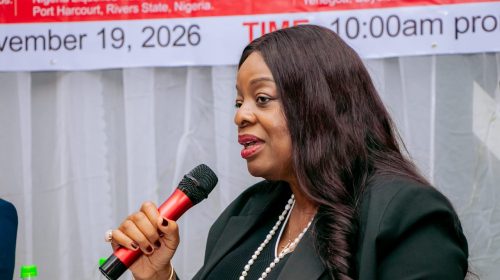
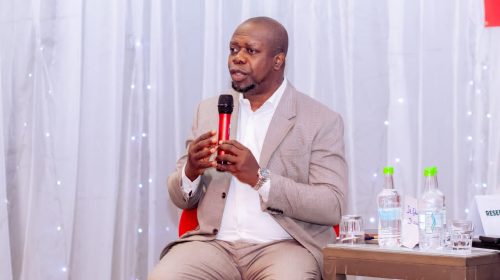
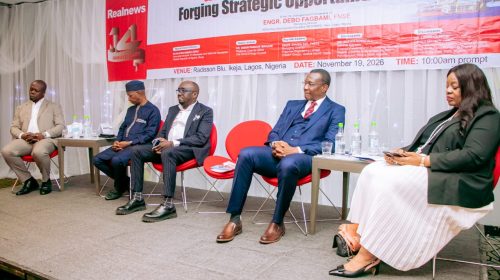
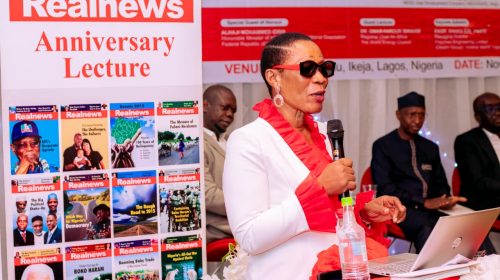
Earlier, the programme featured goodwill messages and discussions involving industry stakeholders on the implications of geopolitical developments for Africa’s energy security and economic future.
The event was attended by government officials, industry leaders, policymakers, regulators, engineers, members of the diplomatic community and media professionals.

Leave a Reply