

2027 Elections: Lai Mohammed Urges Nigerians to Prioritise Economy, Security, Nation-Building
BY NGOZI ONYEAKUSI

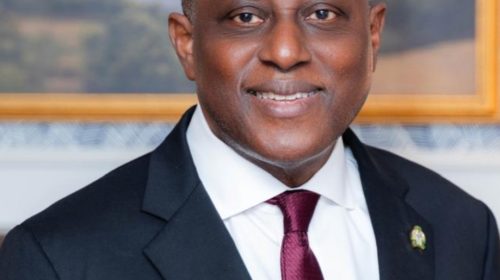
Former Minister of Information and Culture, Alhaji Lai Mohammed, has urged Nigerians to approach the 2027 general elections as an opportunity to strengthen democratic institutions, sustain economic reforms and promote national stability.
Mohammed made the call on Thursday while serving as Chairman of the 7th Freedom Online Yearly Lecture held at the Sheraton Hotel, Ikeja, Lagos.
The lecture, with the theme, “2027 Elections: Economy, Security and Nigeria’s Future,” featured Lagos State Governor, Babajide Sanwo-Olu, as the Special Guest Speaker.
Mohammed said the interconnection between security, economic growth and political stability must remain central to national discourse as Nigeria approaches another election cycle.
According to him, security remains a fundamental precondition for economic development, noting that businesses and investors are unlikely to commit capital in an environment characterised by uncertainty and insecurity.
“It is important to note, first, that security is the precondition for economic growth. No business thrives in an atmosphere of uncertainty, and no foreign or local investor deploys capital where safety cannot be guaranteed,” he said.
He, however, noted that political stability also depends significantly on economic inclusion, particularly the ability of young Nigerians to secure meaningful employment and see a clear path to self-actualisation.
Mohammed argued that an economically empowered youth population would be less vulnerable to political manipulation and electoral violence.
He urged Nigerians to view the 2027 election not simply as a contest for political power but as an opportunity to deepen nation-building and strengthen democratic institutions.
“Politics must never be allowed to override governance,” he said, adding that the true measure of democratic progress should be whether electoral outcomes strengthen institutions, improve investor confidence and guarantee peace across communities.
The former minister acknowledged the difficult challenges confronting the Federal Government in the areas of security and economic reform, stressing that such challenges could not be resolved overnight.
He called for consistency, patience, institutional strengthening and greater national cooperation in addressing the country’s challenges.
Mohammed also urged stakeholders to constructively engage with the efforts of the Federal Government to stabilise the economy, attract investment, improve security and establish a sustainable foundation for long-term growth.
Speaking on the role of the media ahead of the 2027 elections, Mohammed said journalists and media organisations had a major responsibility in shaping public discourse and influencing national stability.
Having spent considerable time in public communication, he said he had come to appreciate that the media was not merely an observer of national events but an important participant in shaping the national conversation.
He said the media had the power to inform citizens, interrogate claims, expose falsehoods and provide platforms for competing ideas.
However, Mohammed warned that irresponsible journalism could also amplify fear, deepen divisions and transform political disagreements into ethnic, religious or regional conflicts.
He therefore called for a media that is “robust without being reckless; critical without being destructive; patriotic without becoming partisan; and free without forgetting the enormous responsibility that comes with freedom.”
According to him, media reporting during election campaigns directly affects public perception, economic confidence and national security.
“Sensationalism, fake news and incendiary rhetoric act as accelerants to instability. Responsible journalism, on the other hand, elevates the discourse from tribal and partisan sentiment to policy, competence and concrete solutions,” he said.
Mohammed charged the Nigerian press to remain custodians of truth as the country prepares for the 2027 elections.
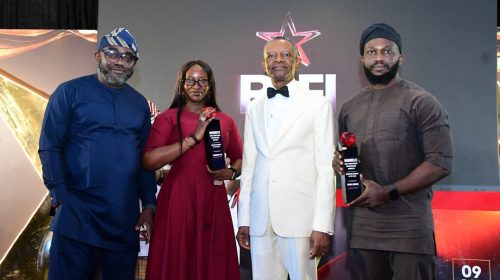
He also commended Freedom Online and its Managing Director and Editor-in-Chief, Gabriel Akinadewo, for sustaining the annual lecture series for seven years.
He described the platform as an important avenue for national reflection, noting that Freedom Online had consistently demonstrated a commitment to informing the public without fear and provoking thought without malice.
The former minister expressed confidence that Governor Sanwo-Olu, who delivered the keynote lecture, would provide useful perspectives on the complex issues of governance, security, infrastructure and economic innovation.
He also urged participants at the lecture to engage constructively with the issues raised and leave the event with a clearer understanding of how Nigerians could collectively safeguard the country’s future.


Leave a Reply