

GOCOP 2026: Adaora Sydney-Jack warns of declining women’s representation in 2027 elections
BY NGOZI ONYEAKUSI

Gender equality advocate, Dr. Adaora Onyechere Sydney-Jack, has warned that women’s representation in Nigeria’s political process may decline further in the 2027 general elections unless political parties adopt transparent and inclusive candidate-selection processes.
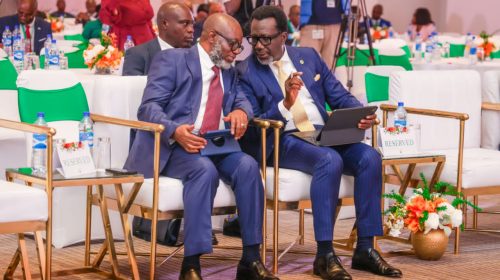
Sydney-Jack, Creative Director of Gender Agenda and Founder of WEWE Network Afrique, raised the concern during a panel session at the 10th Annual Conference of the Guild of Corporate Online Publishers (GOCOP), held at the Radisson Blu Hotel, Ikeja GRA, Lagos.
The conference, held on October 7 and 8, 2026, had as its theme, “2027 Elections: Trust, Transparency and Shared Responsibilities.”
She described women’s participation in the electoral process as largely performative, calling for a shift towards meaningful inclusion that would enable more women to emerge as candidates and win elective positions.
According to her, the outcome of political party primaries ahead of the 2027 elections indicates a worrying decline in women’s participation compared with previous election cycles.
She disclosed that only three female senatorial candidates had emerged across 22 political parties following the primaries, while only two women had emerged as presidential candidates.
She added that four female vice-presidential candidates had emerged across the New Nigeria Peoples Party (NNPP), Labour Party, Young Progressives Party (YPP) and Young Party (YP).
Sydney-Jack cautioned that the emergence of women on the ballot did not guarantee their eventual victory, stressing the need to address the structural barriers limiting women’s access to political offices.
She particularly criticised the opaque consensus method adopted by some political parties in selecting candidates, arguing that the process often sidelines women from the earliest stages of political participation.
She also cited the low representation of women among candidates of major political parties, including the ruling All Progressives Congress (APC), as evidence of the scale of the challenge.
The gender advocate warned that the trend could further reduce the number of women in the National Assembly, where women currently occupy only a small proportion of seats.
She said the projected decline reinforced the need for deliberate measures, including legislation to reserve seats for women, to increase their participation in the country’s electoral process.
On electoral credibility, Sydney-Jack said the deployment of modern technology by the Independent National Electoral Commission (INEC) would not, on its own, guarantee public confidence in elections.
She maintained that technological credibility must be matched by institutional credibility, accountability and the enforcement of electoral laws.
According to her, INEC must demonstrate its commitment to credible, free and fair elections and ensure that violations are adequately punished to rebuild public trust.
She also cautioned against interpreting the outcome of the Osun State governorship election as a definitive indication of what would happen in the 2027 general elections.
She argued that Osun was only one of Nigeria’s 36 states and the Federal Capital Territory, adding that public perceptions of electoral credibility remained a significant concern.
The panel session formed part of discussions at the GOCOP conference, which brought together media professionals, security officials, academics and other stakeholders to examine the responsibilities of institutions and citizens in ensuring credible elections in 2027.




Leave a Reply