

2027 Election: GOCOP Tasks INEC On Transparency, Urges Prosecution Of Electoral Offenders
BY NGOZI ONYEAKUSI
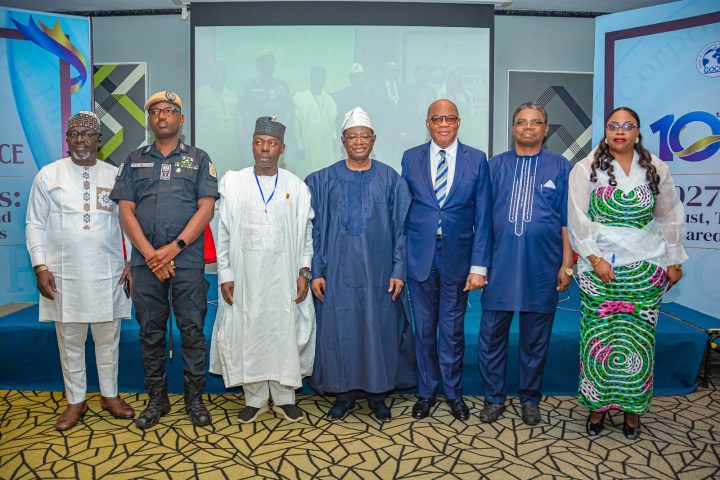
The Guild of Corporate Online Publishers (GOCOP) has urged the Independent National Electoral Commission (INEC) to strengthen transparency, publish verifiable information on election preparations and ensure the prosecution of electoral offenders ahead of the 2027 general elections.
The Guild also called on INEC to establish a digital media fact-verification channel to enable editors to confirm field reports, security incidents and technical issues before publication.
These were part of the resolutions reached at the Guild’s 10th Annual Conference, held on October 7 and 8, 2026, at the Radisson Blu Hotel, Ikeja GRA, Lagos, with the theme, “2027 Elections: Trust, Transparency and Shared Responsibilities.”
The communiqué, signed by GOCOP President, Danlami Nmodu, mni, and General Secretary, Sufuyan Ojeifo, stressed that public trust was critical to the credibility of the 2027 elections.
It noted that only 38 per cent of Nigerians reportedly expressed confidence in the credibility of elections, warning that technological innovations alone could not replace institutional credibility.
The conference urged INEC to provide timely and clear information on election logistics, technology tests and result management at every stage of the electoral process.
It also recommended that the commission translate the Electoral Act, regulations and voter education materials into major Nigerian languages while sustaining accessible formats for persons with disabilities.
The Guild further called on INEC to work with prosecuting authorities to bring electoral offenders to justice and make the outcomes of such prosecutions public.
On the role of the media, GOCOP urged its members and other media organisations to prioritise accuracy over speed, reject sensational headlines and insulate election reporting from partisan and proprietorial interests.
It warned against publishing unverified polling-unit results, altered result sheets and inflammatory speculation, adding that breaches of the Guild’s code would attract sanctions.
The conference also welcomed INEC’s proposed three-point pact on fact-verification, editorial self-regulation and voter education, stating that GOCOP’s Executive Council would engage the commission on implementation without compromising editorial independence.
It called on media organisations, including the Nigeria Union of Journalists (NUJ), to seek judicial interpretation of Section 60 of the Electoral Act 2026 in relation to Section 39 of the 1999 Constitution on the media’s legal position regarding exit polls, projections and independent election tallies.
The conference expressed concern over the spread of fake news, unverified leaks, synthetic media and artificial intelligence-generated deepfakes, describing information disorder as a threat capable of inflaming divisions and discouraging voter participation.
It also urged media organisations to support voter education by providing accurate information on Permanent Voter Card (PVC) collection venues, opening hours and requirements.
According to the communiqué, nationwide collection of PVCs was scheduled to commence on October 9, 2026, signalling the beginning of the countdown to the general elections.
On political participation, GOCOP called on the National Assembly to enact legislation that would deliberately increase women’s participation and representation in the electoral process.
Political parties were also urged to adopt open and transparent candidate-selection processes and end opaque consensus arrangements that exclude women.
The conference further called on the Federal Government and relevant agencies to provide clear and authoritative information on fuel subsidy policy and domestic crude pricing to enable voters to make informed decisions.
It urged candidates to focus their campaigns on issues affecting Nigerians, particularly the cost of living, while avoiding disinformation and incitement.
The Guild also called on the police and other security agencies to sustain lawful, intelligence-led and non-partisan security operations throughout the electoral cycle.
Citizens, it said, must collect their PVCs, participate in elections, verify information before sharing it and hold elected officials and public institutions accountable.
The conference, chaired by former President of the Nigerian Bar Association, Dr Olisa Agbakoba, SAN, featured a keynote address by INEC Chairman, Prof. Joash Ojo Amupitan, SAN.
Other speakers included Commissioner of Police, Election Planning, Monitoring and Evaluation, Force Headquarters, Abuja, CP Abayomi Shogunle; Head of the Department of Mass Communication, University of Lagos, Prof. Tayo Popoola; Creative Director, Gender Agenda and Founder, WEWE Network Afrique, Dr Adaora Onyechere Sydney-Jack; and Executive Director, International Press Centre, Mr Lanre Arogundade.
The conference also raised concerns about low voter participation, inadequate accountability for electoral offences and the potential exclusion of women from elective positions in 2027.
It cited Botswana’s 2024 political transition, when the Botswana Democratic Party relinquished power after 58 years, as an example of what trusted institutions could achieve in Africa.
GOCOP reaffirmed its commitment to ensuring that its 127 member publications provide fair, accurate and responsible coverage before, during and after the 2027 general elections.
The Guild said credible elections remained a shared responsibility of INEC, security agencies, political parties, the media and citizens.


Leave a Reply