

CBN Links Rate Cut To Price Stability, Says Inflation Drops To 14.63%
BY NGOZI ONYEAKUSI

The Central Bank of Nigeria (CBN) has highlighted the decline in Nigeria’s headline inflation to 14.63 per cent in September 2026 from 34.8 per cent at the end of 2024, following its decision to reduce the Monetary Policy Rate (MPR) from 26.5 per cent to 23 per cent.
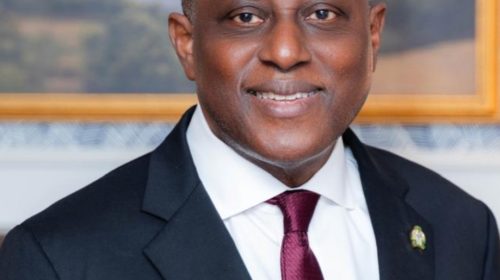
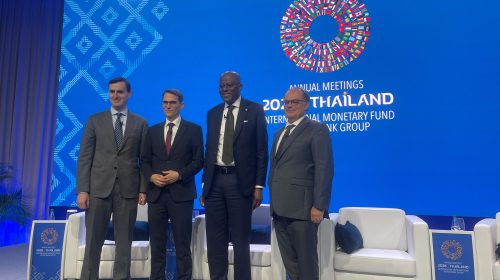
The CBN Governor disclosed this at the 2026 International Monetary Fund (IMF)/World Bank Annual Meetings in Bangkok, Thailand, where he discussed Nigeria’s monetary policy decisions and the importance of price stability amid global economic uncertainty.
He said the September rate adjustment demonstrated the importance of credible institutions, transparent monetary policy decisions and effective communication, particularly as the country seeks to consolidate the gains recorded from recent economic reforms.
The governor noted that Nigeria’s economic indicators were showing encouraging improvements following a period of significant policy adjustments, adding that the priority was to translate the progress into greater investment, productivity and sustainable economic growth.
He also disclosed that Nigeria’s external reserves had risen above $55 billion, their highest level in 18 years, while formal remittance inflows were approaching $1 billion monthly.
On the banking sector, the CBN governor said banks had mobilised N4.65 trillion in fresh capital through the recapitalisation exercise, with slightly more than 70 per cent raised from domestic investors.
He described the level of domestic participation as a vote of confidence in the resilience and long-term prospects of Nigeria’s banking system.
The governor further cited Fitch’s revision of Nigeria’s sovereign outlook from stable to positive as evidence of improving international assessments of the economy.
At the meetings, he said discussions with the IMF, World Bank Group and international credit rating agencies, including S&P Global and Moody’s, focused on Nigeria’s economic outlook, policy priorities and the path towards achieving investment-grade ratings in the medium term.
He stressed the importance of policy consistency, credible institutions and effective coordination between fiscal and monetary authorities in sustaining economic progress.
The CBN governor also warned that Africa must develop the capacity to harness artificial intelligence, saying the continent could not afford to remain a passive participant in a technological revolution that could reshape productivity and global economic competitiveness.
He added that Nigeria was pursuing stronger financial cooperation with Asian economies, particularly in cross-border payments, settlement systems, financial technology and trade finance.
His meeting with the Governor of the People’s Bank of China, Pan Gongsheng, in Bangkok focused on strengthening financial cooperation between both countries, with further discussions expected during a forthcoming visit to Beijing.



Leave a Reply