

NLNG Pays $47.2bn Dividend To Shareholders As Revenue Hits $149.6bn
BY NGOZI ONYEAKUSI
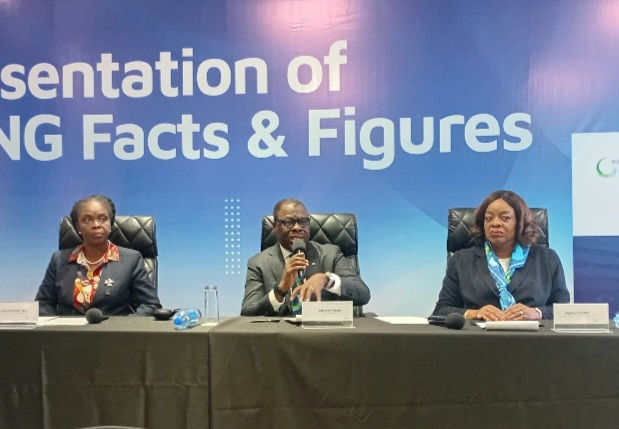
Following $149.6 billion revenue generated by the Nigeria LNG Limited, (NLNG), the firm says it has paid shareholders dividend to the tune of $47.2 billion, including the Federal Government, which holds the largest equity stake in the company.
Presenting the firm’s facts and figure 2026, the company’s annual report, projects and impact to the media today in Lagos, the Managing Director/CEO, Engr. Adeleye Falade, disclosed that the firm has equally paid $10.8 billion in taxes to the Federal Government since becoming tax-compliant in 2009.
“We have generated $149.6 billion in revenue by 2026. We have also paid $10.8 billion in taxes to the Federal Government since becoming tax-compliant,” he said.
He noted that NLNG currently operates six liquefaction trains with assets valued at more than $22.9 billion. Since production commenced, the company has built a fleet of 20 dedicated LNG vessels and delivered over 6,285 cargoes to customers across the globe.
According to him, NLNG now accounts for about six per cent of global liquefied natural gas (LNG) supply, further strengthening Nigeria’s position in the international LNG market.
Speaking on the company’s expansion programme, Falade disclosed that the Train 7 Project on Bonny Island, Rivers State, has reached 93 per cent completion and remains on schedule.
He said the project would increase NLNG’s LNG production capacity by 35 per cent and boost liquefied petroleum gas (LPG) output by 50 per cent, creating additional export volumes while supporting domestic gas supply.
Falade reaffirmed the company’s commitment to strengthening domestic gas availability and advancing Nigeria’s energy transition agenda, noting that ongoing investments are designed to unlock greater economic value while positioning the country to benefit from evolving global energy trends.
He disclosed that NLNG already has an active domestic LNG project and is engaging its Board on expanding the initiative to better serve the local market.
According to him, despite the lengthy timelines associated with large-scale energy projects, the initiative remains a strategic priority.
“We already have a project around domestic LNG. It is very much active and there are people working on it. Like many projects of this nature, it takes years, but we have certainly not abandoned it,” he said.
Falade added that the company is exploring opportunities to accelerate infrastructure development in response to Nigeria’s growing domestic energy demand.
Addressing concerns over possible regulatory constraints, he said NLNG has not encountered any major policy bottlenecks but emphasised the importance of sustained advocacy for reforms capable of unlocking Nigeria’s economic potential.
He stressed that continuous engagement with policymakers is critical to ensuring that the country remains focused on implementing key economic and energy sector reforms.
On environmental sustainability, Falade highlighted the Finima Nature Park as one of NLNG’s flagship carbon sink projects.
He said the conservation park continues to expand and is being considered for designation as a Ramsar Wetland of International Importance, reflecting the company’s commitment to biodiversity conservation.
According to him, NLNG also undertakes annual tree-planting initiatives as part of its carbon reduction strategy while deploying advanced technologies to monitor greenhouse gas emissions.
Falade disclosed that the company has achieved the gold standard in emissions reporting by identifying and quantifying all major sources of emissions across its operations.
He added that NLNG deploys Forward-Looking Infrared (FLIR) cameras to detect fugitive methane emissions that conventional monitoring systems may overlook, enabling faster intervention and improved operational efficiency.
The Managing Director further revealed that the company is collaborating with the Nigerian Upstream Petroleum Regulatory Commission (NUPRC) to identify suitable locations for carbon capture and storage as part of its long-term decarbonisation strategy.
Falade observed that rising global demand for lower-carbon energy products has made emissions reduction both an environmental responsibility and a commercial necessity, noting that producers with higher carbon intensity are increasingly at a competitive disadvantage in international markets.





Leave a Reply